
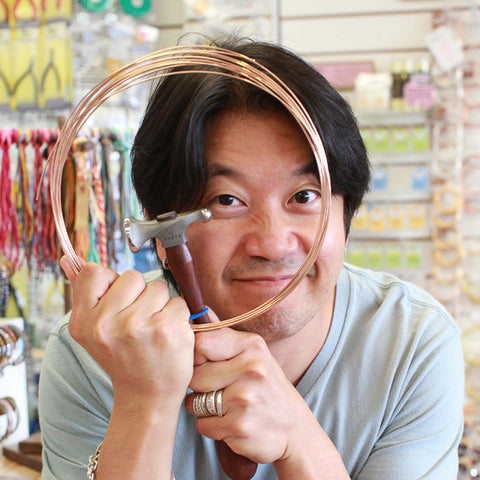
Here's a quickie tool lesson from the world's best bead store owner and tool guy — Jason.
Good tools are the best investment when it comes to crafting, workmanship, and developing your skills. This is the most common story we share in the store: you can have practiced for years, and yet round nose pliers with poorly made jaws will never turn a beautiful round loop. It's not you. It's the tool.
Pictured here are our "workhorses" — German-made chain nose, round nose, and flat nose pliers that we've used for nearly 30 years in the store. They've rotated through classes, demos, made hundreds of wire wraps, been dropped, loaned, oiled, and loved. They've been squeezed by at least a thousand people and have built up their creative mana over the years.
Tools never go out of style. Get a good set and it will last longer than shoes, purses, clothes, and definitely makeup.
It's an investment in our creative spirit and happiness, so live large and get good ones. We personally use every tool in our store. Everything is tried and true, and we welcome questions — we'll show you how to use and care for them.
Jason's Top 5 Tool Tips
1. Oil your tools
This is the single most important thing you can do for your pliers, cutters, and wire tools. A drop of tool oil on the joint and along the jaws every few weeks keeps them moving smoothly and prevents rust from getting a foothold. You don't need anything fancy — 3-in-1 oil, sewing machine oil, or any light machine oil works. Just a drop, work the joint open and closed a few times, and wipe off the excess. Do this regularly and your tools will last decades. Ours have.
2. Use #0000 steel wool to remove rust
If you see rust starting to form — and in Hawaii's humidity, you will — don't panic. Grade #0000 steel wool (the finest grade, also called "super fine") will take it off without scratching the metal. Rub gently along the length of the tool, not in circles. It removes surface oxidation while leaving the finish intact. Follow up with a light coat of oil to protect the clean surface. You can find #0000 steel wool at any hardware store.
3. Wipe off hand lotion
This is the one that surprises people. If you use hand lotion — and most of us do — wipe your tools down after each session. Lotion contains water, oils, and sometimes salts that sit on metal surfaces and actively attract moisture. Jason has seen beautiful tools develop rust spots within days just from lotion residue. A quick wipe with a dry cloth after you're done crafting is all it takes.
4. Masking tape your plier jaws
When you're working with larger gauge wire (especially 16 gauge and above), the serrations or edges on your plier jaws can leave marks on the wire. Jason's fix: wrap a layer of painter's tape or masking tape around the jaw tips before you start. It gives you grip without marring the wire surface. This is especially important with soft metals like copper and sterling silver, where every scratch shows. Replace the tape when it wears through — it's cheap insurance for clean wire work.
5. Never store tools in a sealed plastic bag
Jason stresses this one the most. He's seen too many beautiful tools rusted beyond saving because someone stored them in a ziplock bag. Here's what happens: any moisture trapped inside the bag has nowhere to go. It condenses on the metal surfaces and sits there. In Hawaii's climate especially, even a tiny bit of humidity in a sealed bag will rust your tools. Store them in an open tool roll, a cloth pouch, or standing upright in a cup on your workbench — anywhere air can circulate. If you need to travel with them, use a fabric tool wrap, not plastic.
These are just a handful of Jason's tool tips — there are always more to come. If you have a question about a specific tool, come in and ask. Jason will probably pick it up and demonstrate on the spot.